



Digital Nomad Tenerife: The Complete 2026 Guide
Visa, cost of living, internet, best areas and coworking. A practical guide to working remotely from Tenerife, by locals in Santa Úrsula.
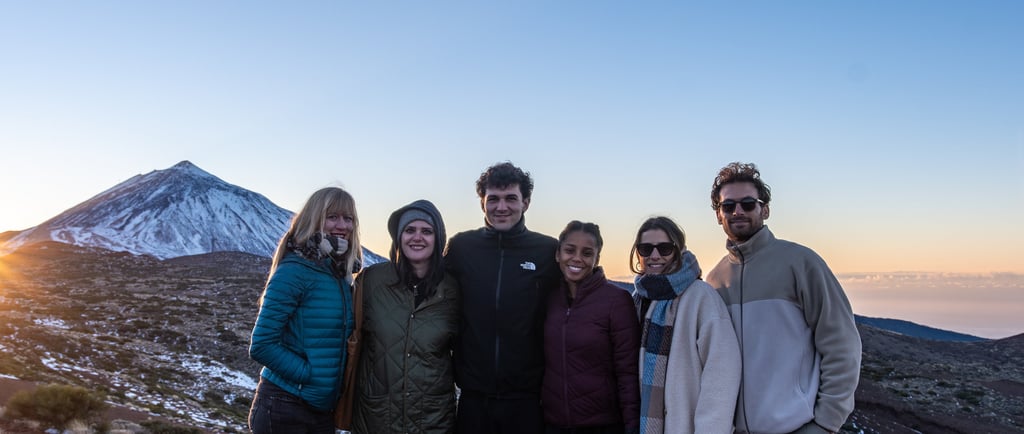
If you are considering Tenerife as your next remote work base, this is the guide we wish existed when we first arrived. We run Bencomo Coliving from Santa Úrsula in the north of the island, and we get the same questions every week from people thinking about making the move. How fast is the internet? Is the digital nomad visa worth it? Where should I actually live? Is the south better than the north?
This guide answers all of those. Practically, with current numbers, written by people who actually live and work here. No tourism board fluff.
Is Tenerife Good for Digital Nomads?
Short answer: yes, and the reasons are unusual for a remote work destination.
The climate is the headline. Temperatures sit between 18 and 25°C all year, so your "Tuesday afternoon walk" works in February the same way it works in July. The more practical advantages are the time zone (GMT, the same as London, only one hour off Central Europe, which is much easier than Bali or Mexico for client calls), EU jurisdiction (banking, healthcare, your phone plan just works), fiber internet reaching 600+ Mbps in most populated areas, and a Spanish digital nomad visa that is straightforward to qualify for if you are outside the EU.
The downsides are real too. Long term rentals tightened up in 2024 and 2025 and they are harder to find. The south can feel like an extended airport zone if you do not choose carefully. And the bus network is good but not Lisbon good.
Compared to other "winter in Europe" spots, Madeira is more isolated and harder to leave, Lisbon is more expensive and colder from November through February, and Las Palmas (Gran Canaria) is similar but more concentrated in a single city. Tenerife has that rare mix of mountains, coast, and proper interior towns with identity. Italians often call this kind of life "smart working", and they make up a quietly significant chunk of the nomads who stay longer here.
Cost of Living in Tenerife for Digital Nomads
A realistic monthly budget for a single nomad living in the north of the island, working from a coworking 3 to 4 days a week.
Accommodation: €650 to €1,400 per month. Studio rental sits at the lower end. Coliving sits at the higher end.
Coworking: €100 to €200 per month. Dedicated desk. Cheaper if you go hot desk.
Groceries: €200 to €300 per month. Mercadona and Hiperdino are the main supermarkets. Local produce is excellent.
Eating out: €150 to €250 per month. Guachinches (rural Canarian restaurants) and the menú del día (around €10 to €13) keep this low.
Transport: €40 to €150 per month. Bus pass around €40. Or part time car rental around €150.
Phone and utilities: €30 to €50 per month. eSIM packages (Holafly, Orange) work well for short stays.
Total monthly cost: roughly €1,170 to €2,350. Mid range compared with Lisbon or Barcelona.
A few things tourists do not know but nomads learn fast:
The menú del día (€10 to €13 for a three course lunch with wine at local restaurants) is the single biggest budget hack on the island.
Tenerife is a Special Tax Territory. IGIC, the local VAT, is 7% on most goods instead of mainland Spain's 21% IVA. That makes electronics, restaurant bills, and groceries noticeably cheaper.
North Tenerife is 25% to 35% cheaper than the south for equivalent accommodation quality.
If you stay at a coliving (we cover coliving in Tenerife further below), most of the categories above are bundled. Accommodation, utilities, internet, often coworking access, sometimes meals. Budgeting becomes much simpler.
Spain's Digital Nomad Visa
Spain launched the Digital Nomad Visa (DNV) in January 2023, and it has become one of the more accessible visas in Europe.
Who qualifies. Citizens from outside the EU and EEA working remotely for a company based outside Spain, or as a freelancer with at least 80% of clients abroad.
Income requirement. Roughly €2,762 per month in 2025 (200% of Spain's minimum interprofessional wage, paid across 14 monthly instalments under the Spanish system). Add about €1,036 per month per dependent.
Length. Initial visa is 1 year if applied for from outside Spain, or 3 years if applied for from within Spain on a tourist visa. Renewable up to 5 years total, after which you can apply for permanent residency.
Tax angle. Successful applicants can opt into the "Beckham Law" tax regime, a flat 24% income tax for the first 6 years (instead of progressive Spanish rates that climb to 47%). Significant if you earn over roughly €50,000 a year.
How to apply. Easier from within Spain on a tourist visa than from your home country. Documents needed: remote work contract or freelance contracts, 3 months of payslips or invoices, criminal record certificate (apostilled and translated), private health insurance valid in Spain, and proof of social security coverage. You can show social security coverage via your home country's bilateral agreement with Spain, or by registering as autónomo.
Practical note: most nomads we meet apply after arriving on a 90 day tourist visa, while staying at a coliving. Processing from inside Spain typically takes 30 to 45 days. From a consulate abroad, often 3 to 4 months.
Internet Speeds in Tenerife
This is the question we get asked most often, and the answer is much better than the island's reputation suggests.
Fiber availability. Movistar, Orange, and Vodafone all offer fiber to the home in populated areas. On Tenerife that means everywhere from Santa Cruz down through the southern resort coast, plus the entire north coast including Puerto de la Cruz, La Orotava, Santa Úrsula, and Tacoronte. Standard plans deliver 300 to 600 Mbps. 1 Gbps is available in most urban areas for around €40 to €50 a month.
Mobile coverage. 5G is solid across the populated parts of the island. As a backup for video calls, an eSIM with 20 to 50 GB of data is more than enough.
Where it thins out. Some rural inland areas (above Vilaflor, parts of the Anaga peninsula, the high Teide National Park) still have patchy mobile coverage and slower fixed lines. If you are planning to road trip the island with your laptop, expect a few dead zones.
At Bencomo. We run fiber plus a dedicated coworking router with a wired backup. Speed tests typically come in at 400 to 500 Mbps. More on our coworking is on the coworking page.
Best Places in Tenerife for Digital Nomads
There is no single "right" answer here, but the choice between north and south matters more than most nomads expect.
North Tenerife (Santa Úrsula, Puerto de la Cruz, La Orotava, La Laguna, Tacoronte) is greener, cooler in summer, lower cost, more locally Spanish, and attracts a slower paced crowd. Café culture is real here. Drive 20 minutes and you are in pine forests. Drive 40 minutes and you are at the base of Teide. The trade off: a few more cloudy days than the south, and the international nomad scene is smaller. Some people love that. Some do not.
South Tenerife (Costa Adeje, Las Américas, Los Cristianos, El Médano) is drier and sunnier, has more visible nomad and tourist infrastructure, and is closer to TFS airport. El Médano specifically (a windsurf and kite hub) has the most organic nomad community on the island and feels genuinely different from the rest of the resort strip. Costa Adeje is more upscale. Las Américas is the party zone, which we would skip for remote work.
Santa Cruz and La Laguna (the capital and the university town) are the urban options with the most cafés and the best food scene. La Laguna in particular has a young, walkable, university driven feel, with fewer tourists and more "real Spanish city" character.
If you are not sure, our short version: come for a month in the north first. It is the cheaper test, the pace gives you headspace to actually work, and you can do south coast weekend trips to see if you prefer it down there.
Where to Work: Coworking and Cafés
The island's coworking scene grew significantly in 2024 and 2025. The current main options:
Bencomo Coworking in Santa Úrsula. Our own space. Fiber, dedicated desks, ocean view, day passes available. Bundled with rooms at Bencomo Coliving. Details on the coworking page.
Coworking in Puerto de la Cruz. A handful of options in the historic centre, plus strong café WiFi alternatives.
Coworking in La Laguna. University town options, more affordable, younger crowd.
El Médano coworking spaces. Best fit if you are surf or kite focused and based in the south.
Cafés with reliable WiFi exist across the north, particularly in Puerto de la Cruz, La Orotava and Santa Úrsula. Local norms: order something every 90 minutes or so, and avoid the 14:00 to 16:00 lunch rush when staff actually need tables.
Where to Stay: Coliving vs Long Term Rentals
Three viable paths, depending on how long you are staying.
Coliving (best for 1 to 3 month stays). Fully inclusive: room, utilities, internet, coworking, often community events. No deposit headaches, and you skip the Spanish rental market entirely. At Bencomo we have 5 rooms (Benijo, Canarios, Bollullo, Tajinaste, and Lagarto Tizón), booking through Mango Beds with a 14 night minimum. See our rooms page.
Long term rentals (best for 6+ months). Cheaper monthly cost but more setup: Spanish landlord, NIE number, typically 2 to 3 months of deposit, and furnished apartments are scarce. Idealista and Fotocasa are the two main listing sites.
Hotels with monthly rates. Surprisingly competitive for 1 to 2 month stays in the south, especially in shoulder season (May, October and November).
Weather Throughout the Year
The "Eternal Spring" reputation is real. The island has microclimates worth knowing.
December to February. 18 to 22°C. Occasional rain in the north, drier in the south. No coat needed.
March to May. 19 to 23°C, sunny. The best months for most people.
June to September. 22 to 28°C, dry. Occasional "calima" (Sahara dust days), usually 1 to 3 days, 4 to 6 times a summer.
October to November. 20 to 24°C, occasional rain in the north. Quiet season. Ideal for nomads on longer stays.
If you would rather walk into a Tuesday hike than stay at your desk on a bad weather day, the north fits that lifestyle better. The south is reliably sunnier but with less terrain variety.
Practical Tips Before You Arrive
A short list of things every new nomad asks us.
SIM or eSIM. Holafly (eSIM, easy but pricier) or Orange and Vodafone prepaid (cheaper, requires a store visit with passport). For stays over 1 month, Vodafone's "Tarjeta Yu" 30 day plans are usually the best value.
Banking. N26, Wise, and Revolut all work fine in Spain. A Spanish bank account is only needed if you are applying for the digital nomad visa from within Spain.
Transport. TITSA buses are good and cheap (around €40 a month for unlimited travel). Rental cars from the airport are €15 to €30 a day depending on season. Many nomads rent a car just for the first weekend and then return it.
Language. English is widely spoken in the south and in coworking and coliving spaces. The north is more local, so basic Spanish goes a long way. Our team at Bencomo is bilingual.
Common newbie mistakes. Booking a long stay place sight unseen in Las Américas (loud, touristy, not nomad friendly). Underestimating how often you will want to weekend trip (rent the car). Skipping the menú del día for restaurant tourism.
Frequently Asked Questions
Is Tenerife safe for digital nomads? Yes. Tenerife is consistently among the safer Spanish regions. Petty theft happens in touristy southern zones. The north and inland towns are very quiet. Working from cafés with your laptop is completely normal.
What is the best time of year to visit? Any month is liveable. If you want to optimise: March to May and October to November are the sweet spot months. Warm, sunny, lower tourist density.
Can I work from anywhere with WiFi? In populated areas, yes. Rural inland and Teide National Park are the only patchy spots. Cafés universally have free WiFi, though speeds vary. Coworking spaces and colivings have dedicated business grade lines.
How long can I stay without a visa? EU and EEA citizens, indefinitely. Citizens from outside the EU (US, UK, Canada, Australia, and others), 90 days within any 180 day period on a tourist visa. For longer you need the digital nomad visa, an autónomo visa, or a similar route.
Is the internet really fast enough for video calls? Yes. Fiber speeds of 300 to 600 Mbps are standard in populated areas. Most coliving and coworking spaces guarantee at least 100 Mbps symmetric. Video calls are not an issue.
Is north or south better? Different, not better. The north is cheaper, greener, slower, more local. The south is sunnier, more international, has more nightlife, and costs more. We are biased (we live in the north), but the honest answer is to try the north first. It is the cheaper test.
Do I need a car? Not strictly. The bus network covers the populated coastal areas well. But weekend trips to Teide, Anaga, and inland towns are much easier with a car, and rentals are inexpensive. Many nomads we host rent a car 4 to 6 days a month.
Final Thoughts
The reason Tenerife works as a digital nomad base, in one sentence: it has the climate and lifestyle of a tropical destination, but the infrastructure, time zone, and visa situation of mainland Europe. That combination is rare.
If you are considering coming, we suggest a 2 to 4 week stay at a coliving in the north as your first move. It is the cheapest way to test the island, you do not deal with the rental market on day one, and you get a built in community of other nomads to ask "where is the best café" questions. We obviously think Bencomo Coliving is a great option, but plenty of others exist. What matters is that you actually test the island before committing.
If you have specific questions about Tenerife as a nomad base, you are welcome to email us. We answer every message, usually within a day.
Get in touch
colivingbencomo@gmail.com
+34 679 51 39 52
© 2025. All rights reserved.